
Selected Work
Brand & Marketing Strategy: Influencer vs. Brand Advertising
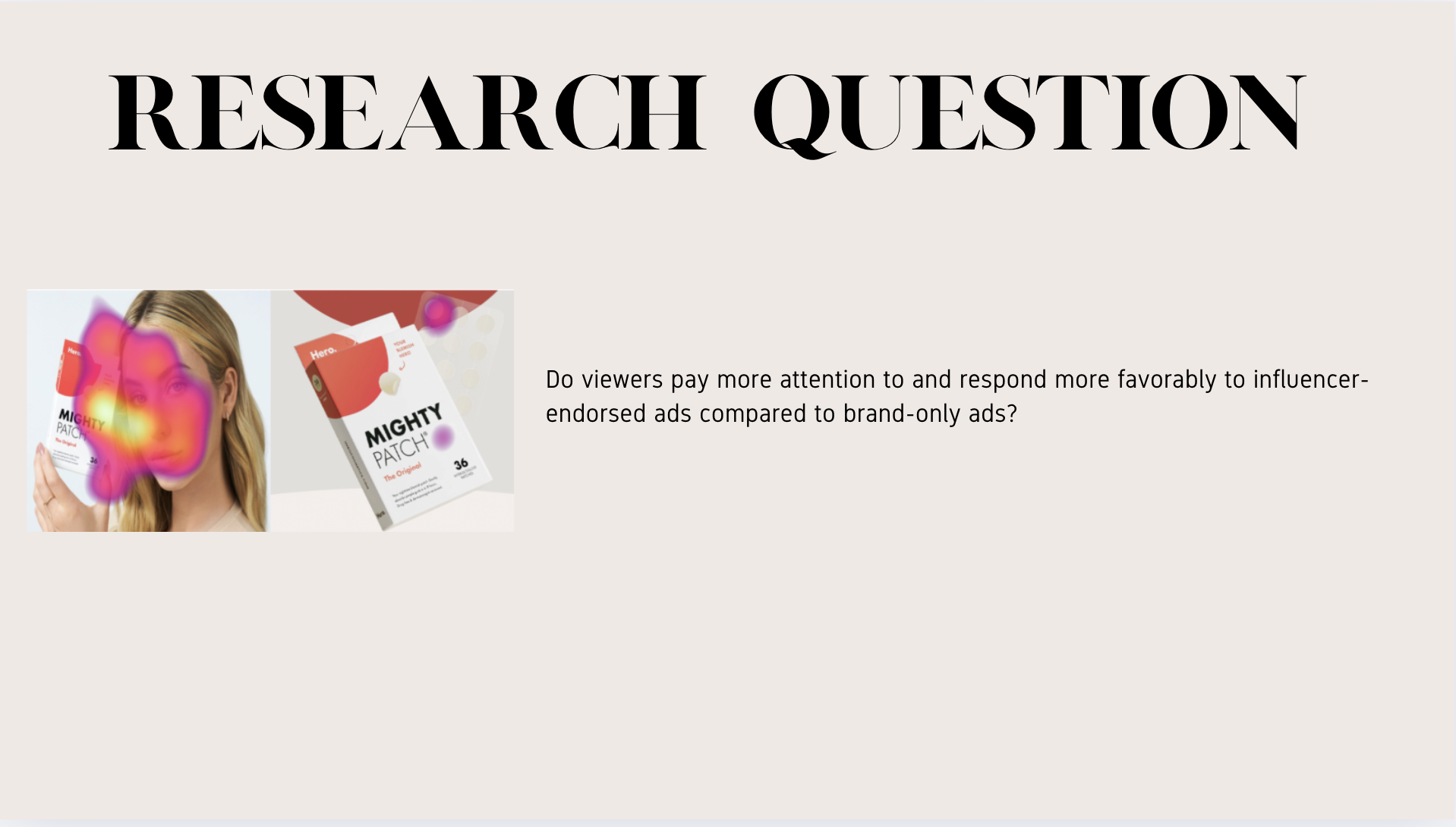
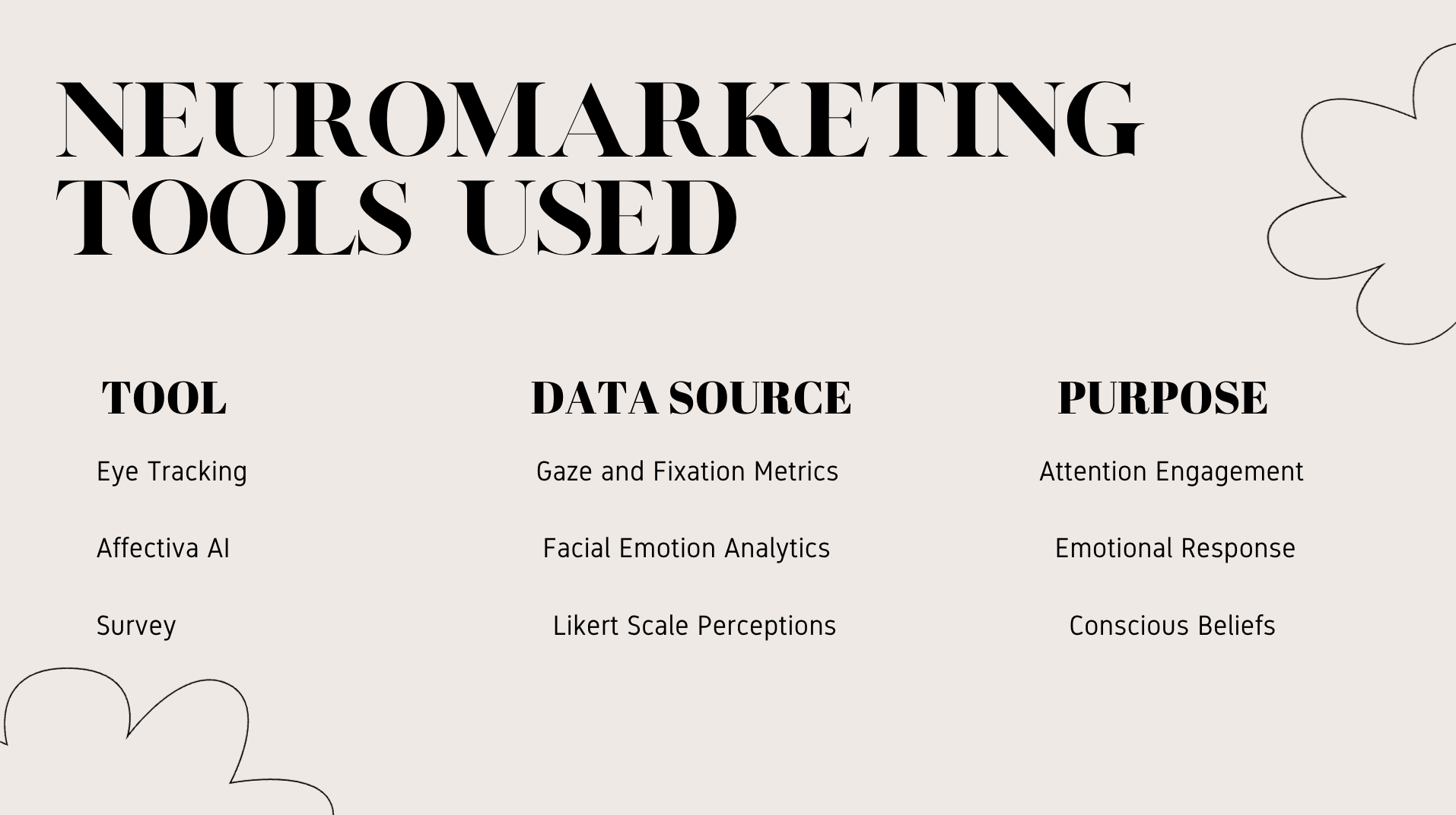
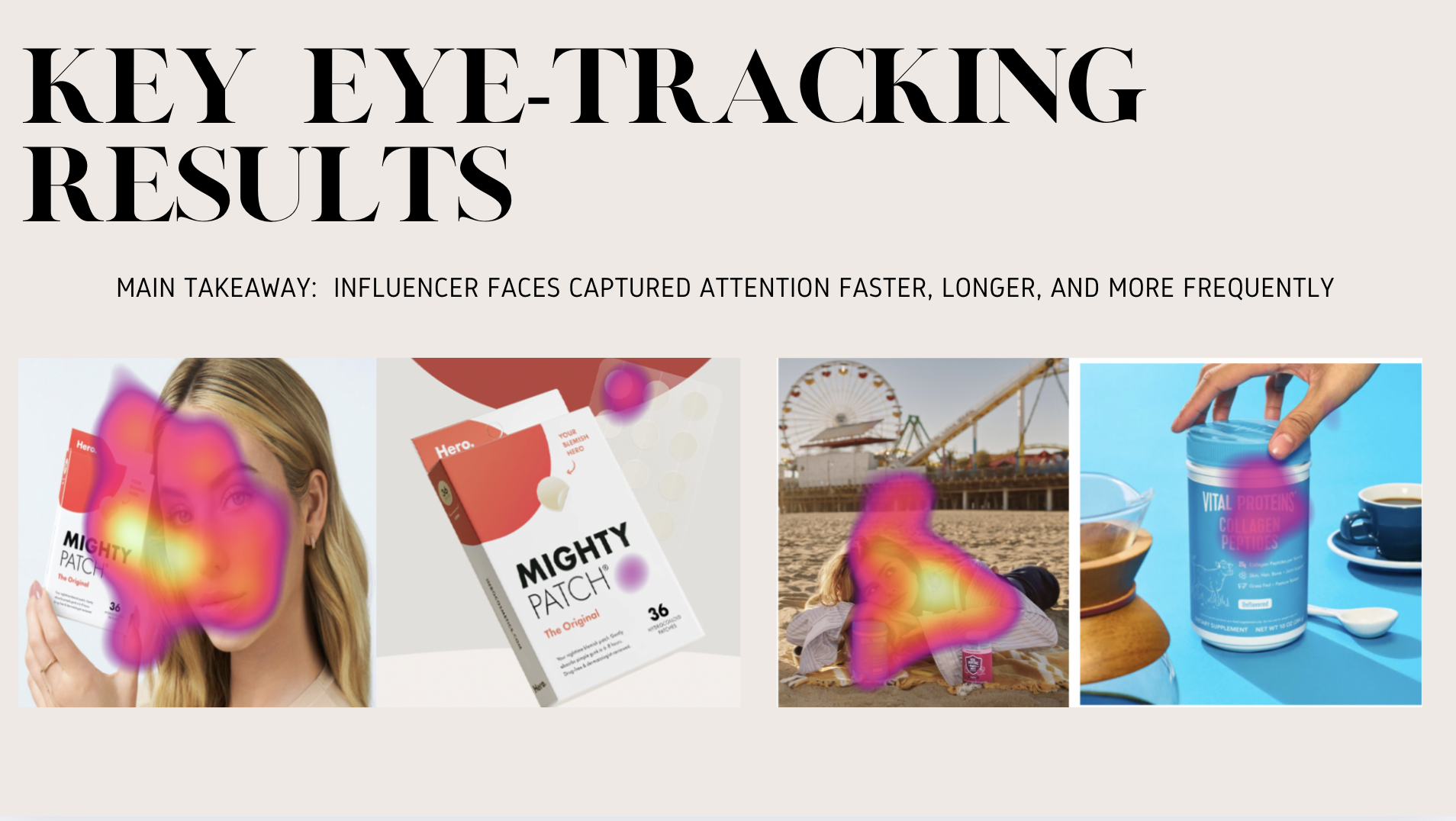
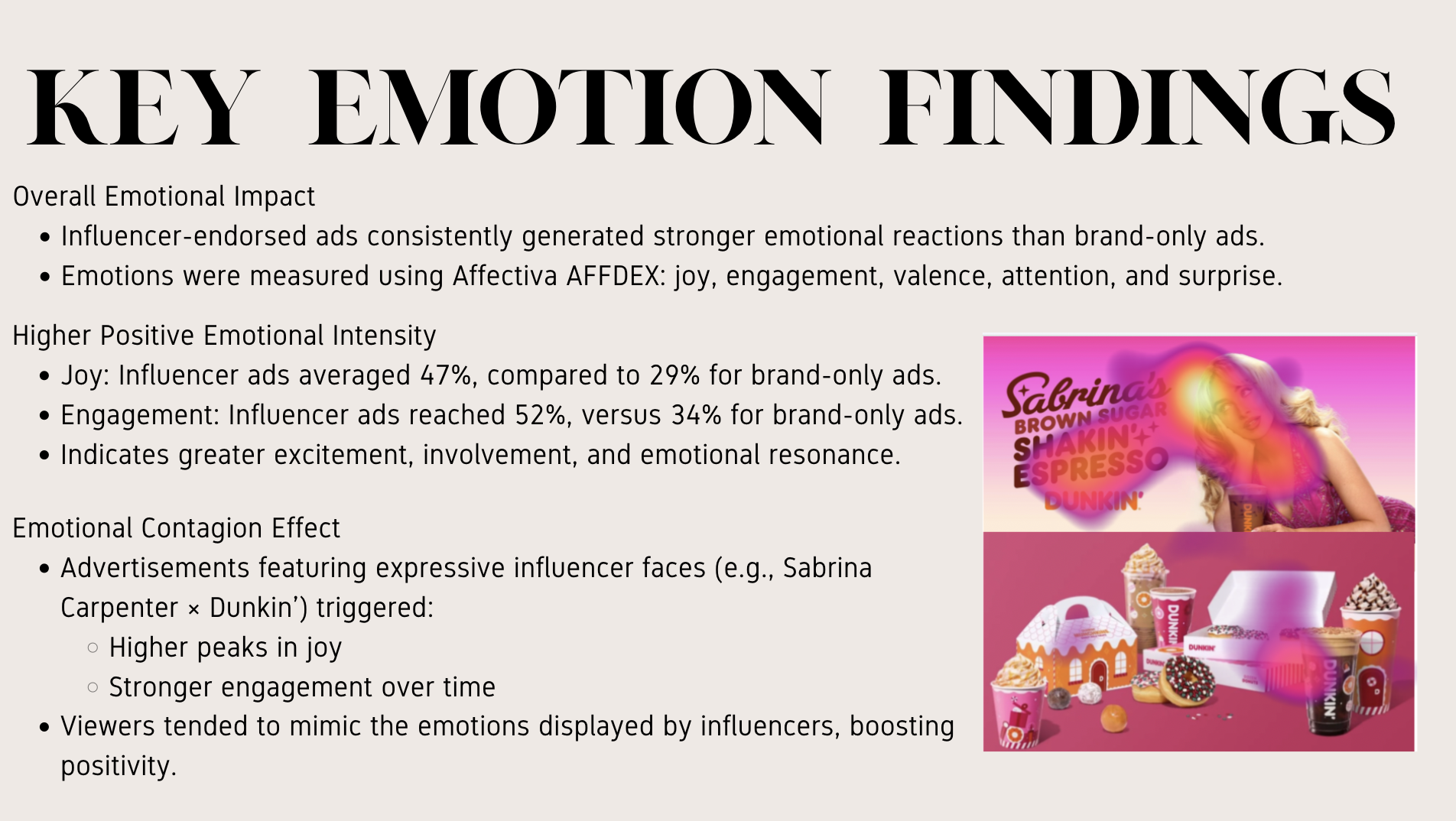
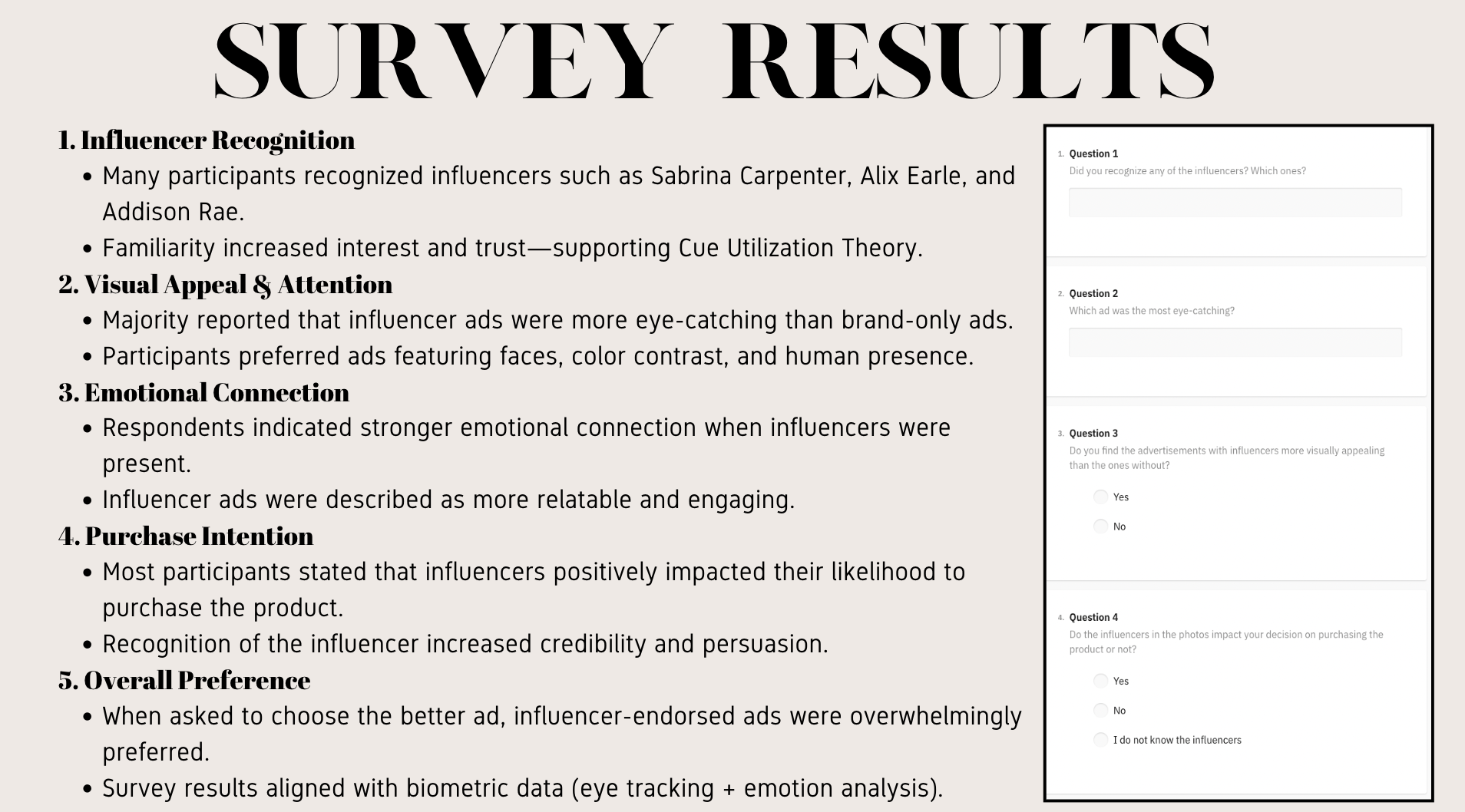
This group research project analyzed how consumers respond to influencer-led advertising compared to brand-only campaigns. Using eye-tracking data, emotional response metrics, and survey insights, the project evaluated differences in attention, engagement, and purchase intent. The findings were used to inform strategic recommendations on how brands can balance influencer partnerships with brand-owned content to strengthen marketing effectiveness and support merchandising and sales objectives.
Consumer behavior analysis • Data interpretation • Marketing strategy • Collaborative research
Influencer-led content captures attention and emotional engagement, while brand-only advertising reinforces clarity and credibility — strongest performance comes from a strategic balance of both.
This project focused on repositioning a local lifestyle brand through refined brand identity, customer segmentation, and experiential strategy. The work explored how messaging, visual direction, and customer experience can be aligned to strengthen brand perception and drive engagement.
Brand Repositioning Strategy — Blossoms / Golden Gather







Brand repositioning • Customer personas • Messaging strategy • Experiential marketing • Visual direction
Buyer Assortment Strategy
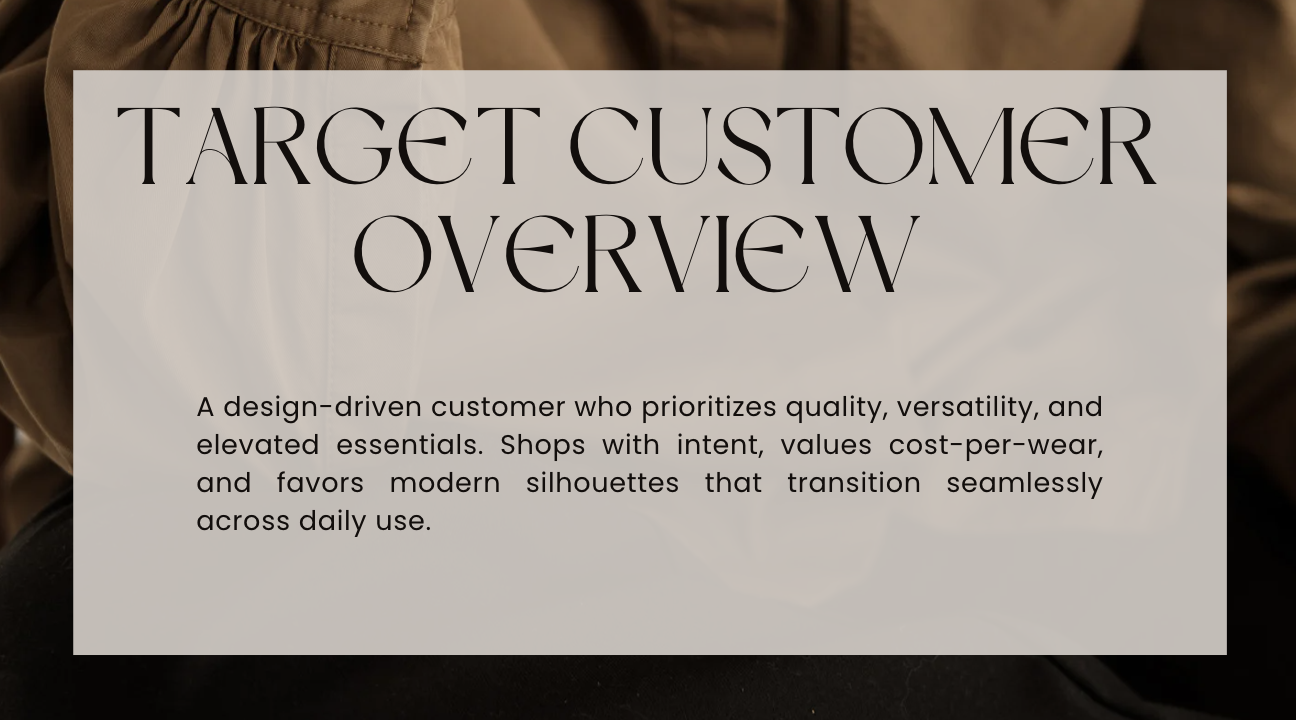
This project presents a buyer-led approach to seasonal assortment planning for a women’s lifestyle brand. The assortment is built using category planning, price architecture, and customer behavior insights to balance volume-driving core products, margin-accretive accessories, and limited seasonal capsules. The strategy prioritizes full-price sell-through while maintaining flexibility to respond to shifts in demand.

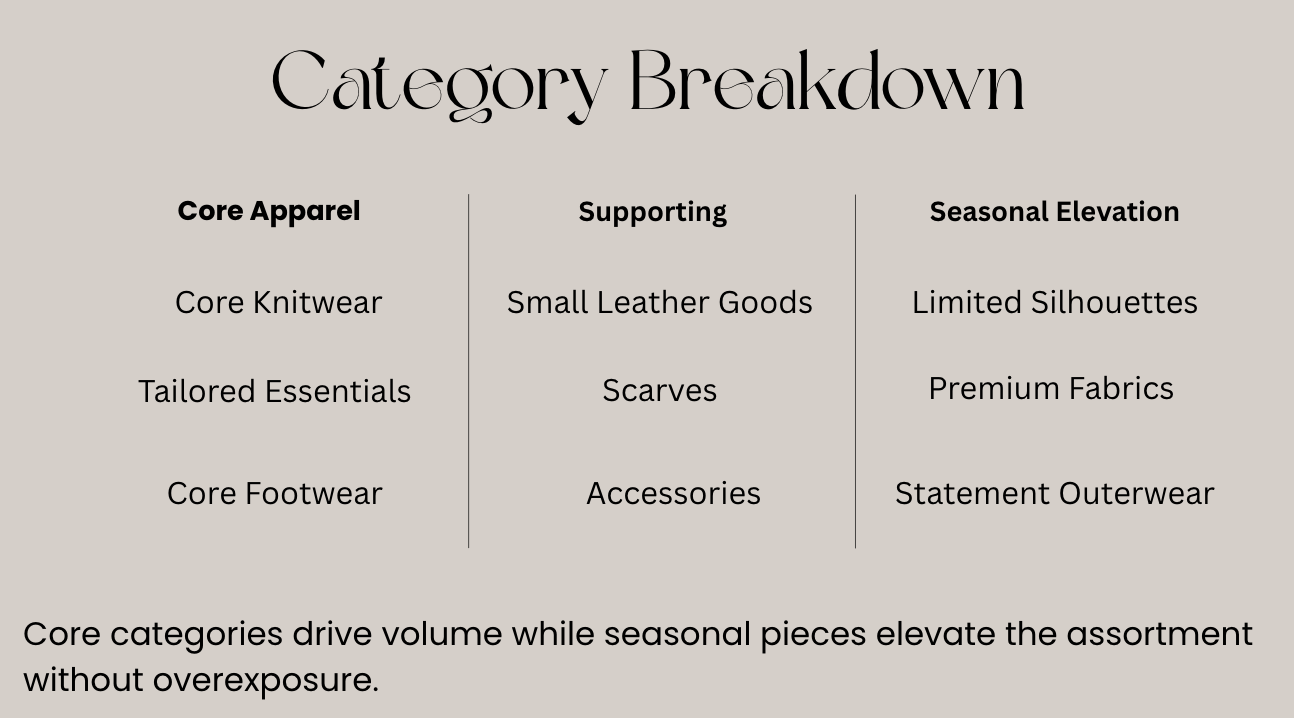
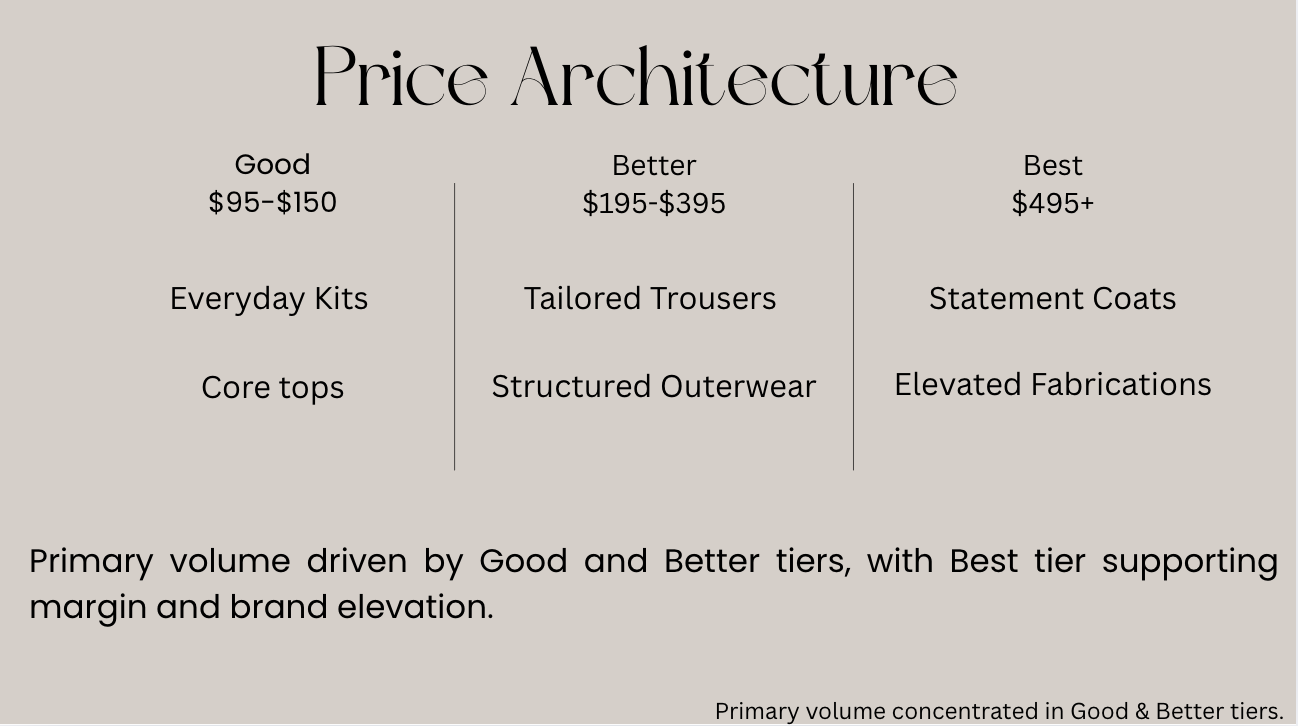
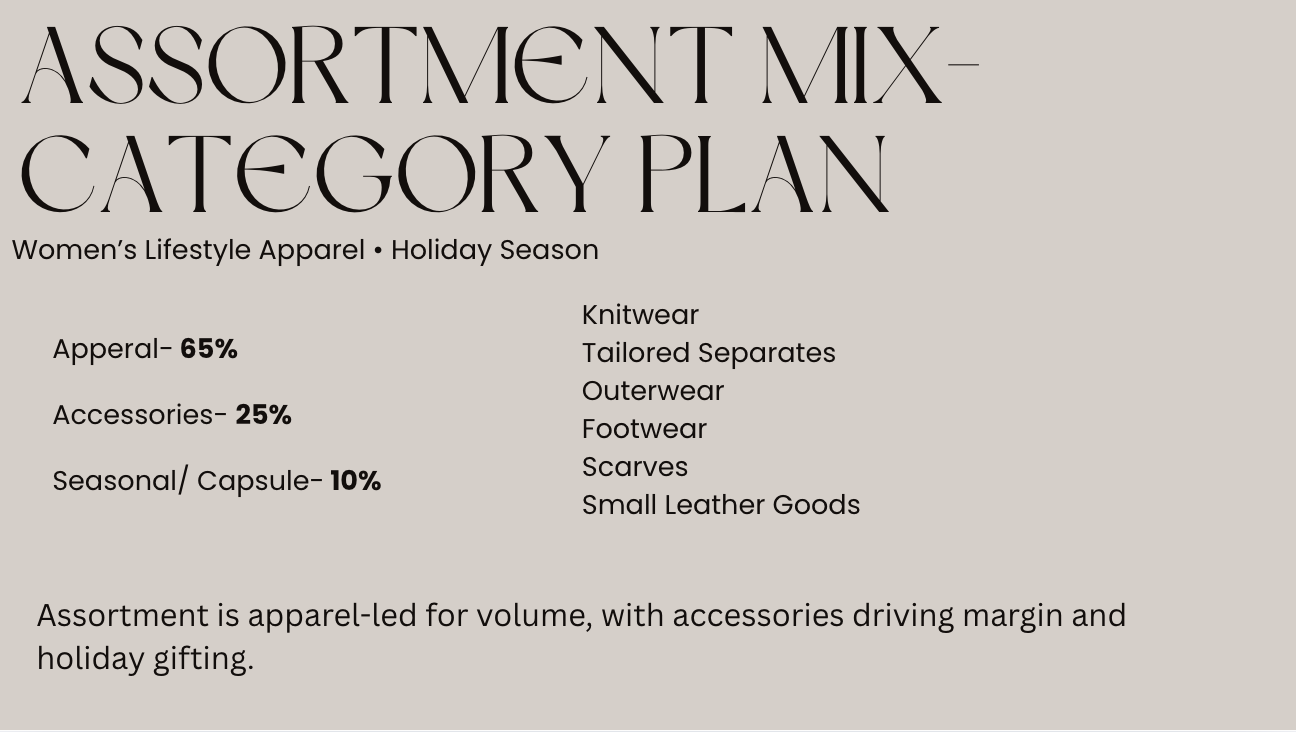
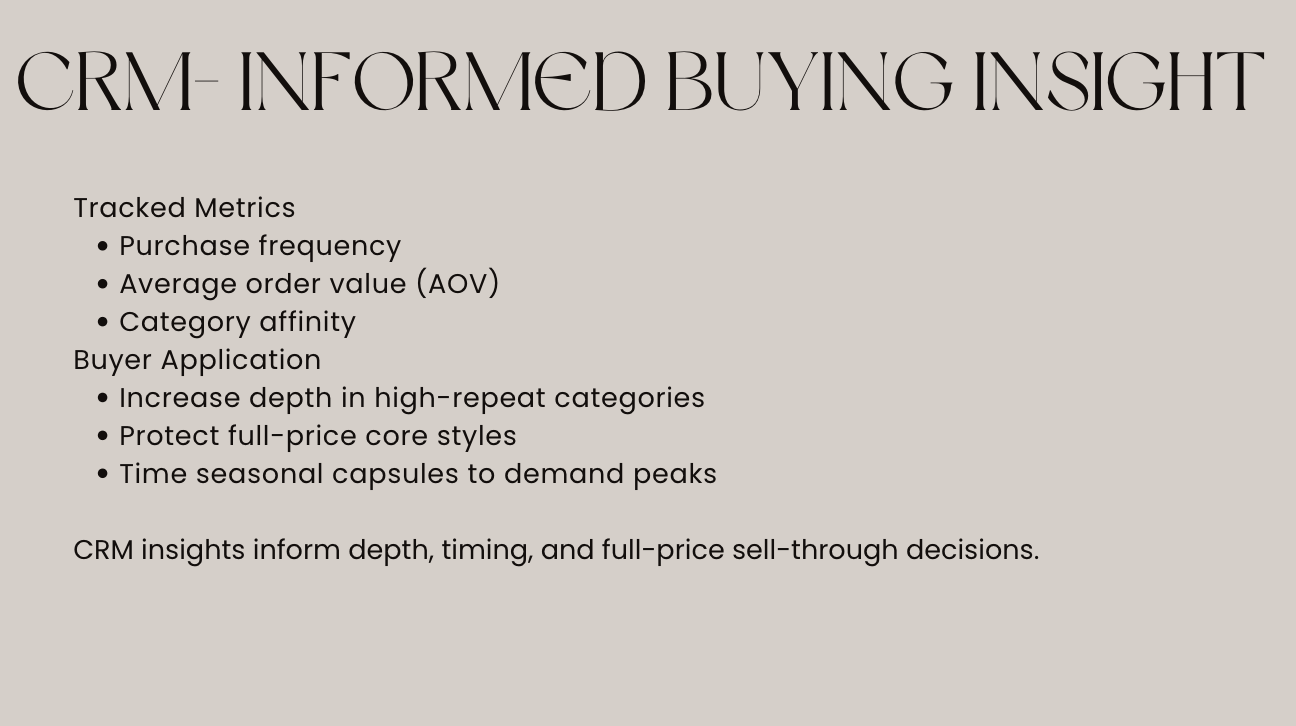
Assortment planning • Category strategy • Price architecture • Margin & volume balance • Inventory planning
CRM-Informed Buying & Communication Strategy
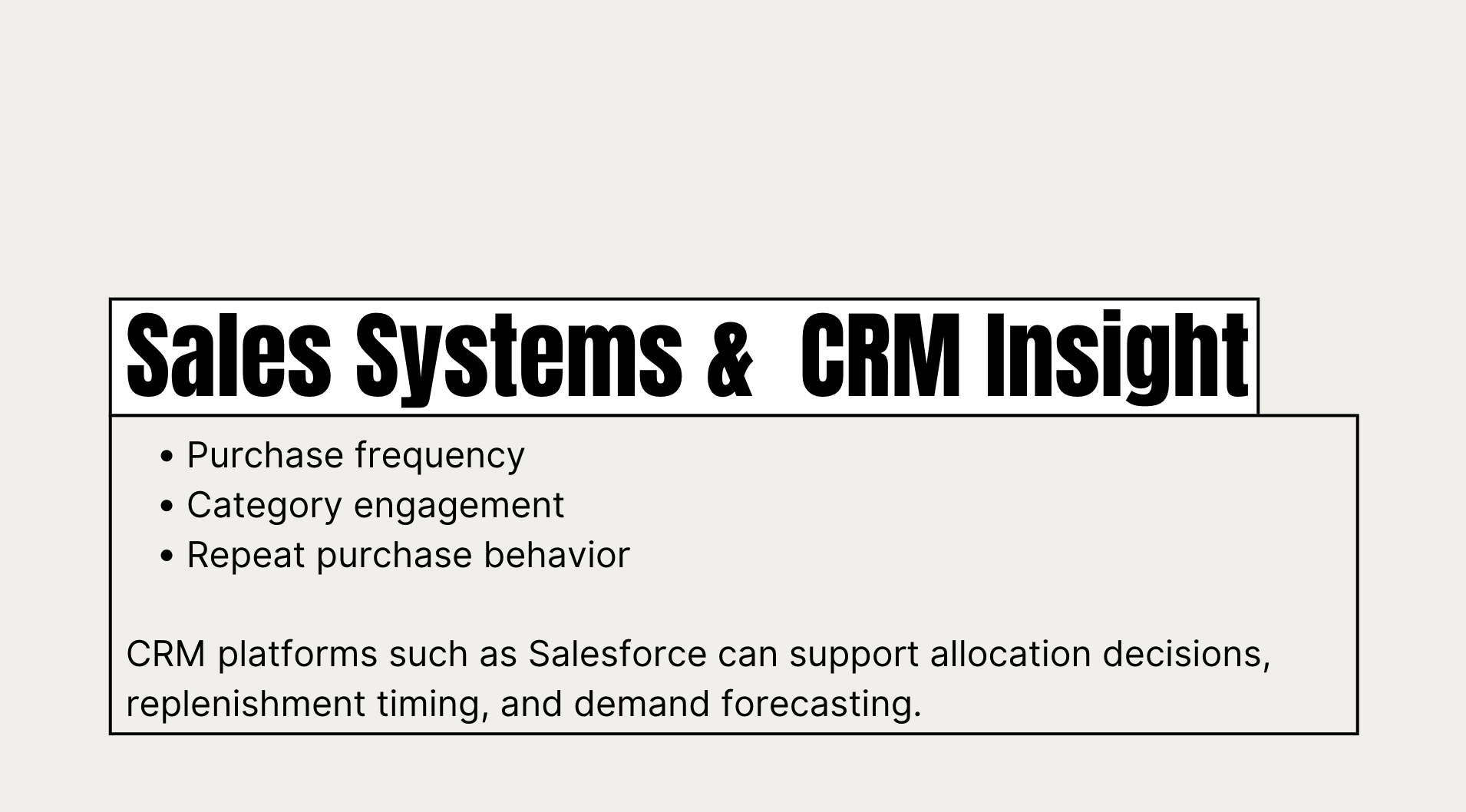
This project explores how CRM insights can inform buying and communication decisions across the customer lifecycle. Using customer segmentation and engagement data, the strategy demonstrates how brands can align product focus, messaging, and timing to increase conversion, retention, and repeat purchase behavior. CRM tools such as Salesforce would be used to track performance and optimize decisions.
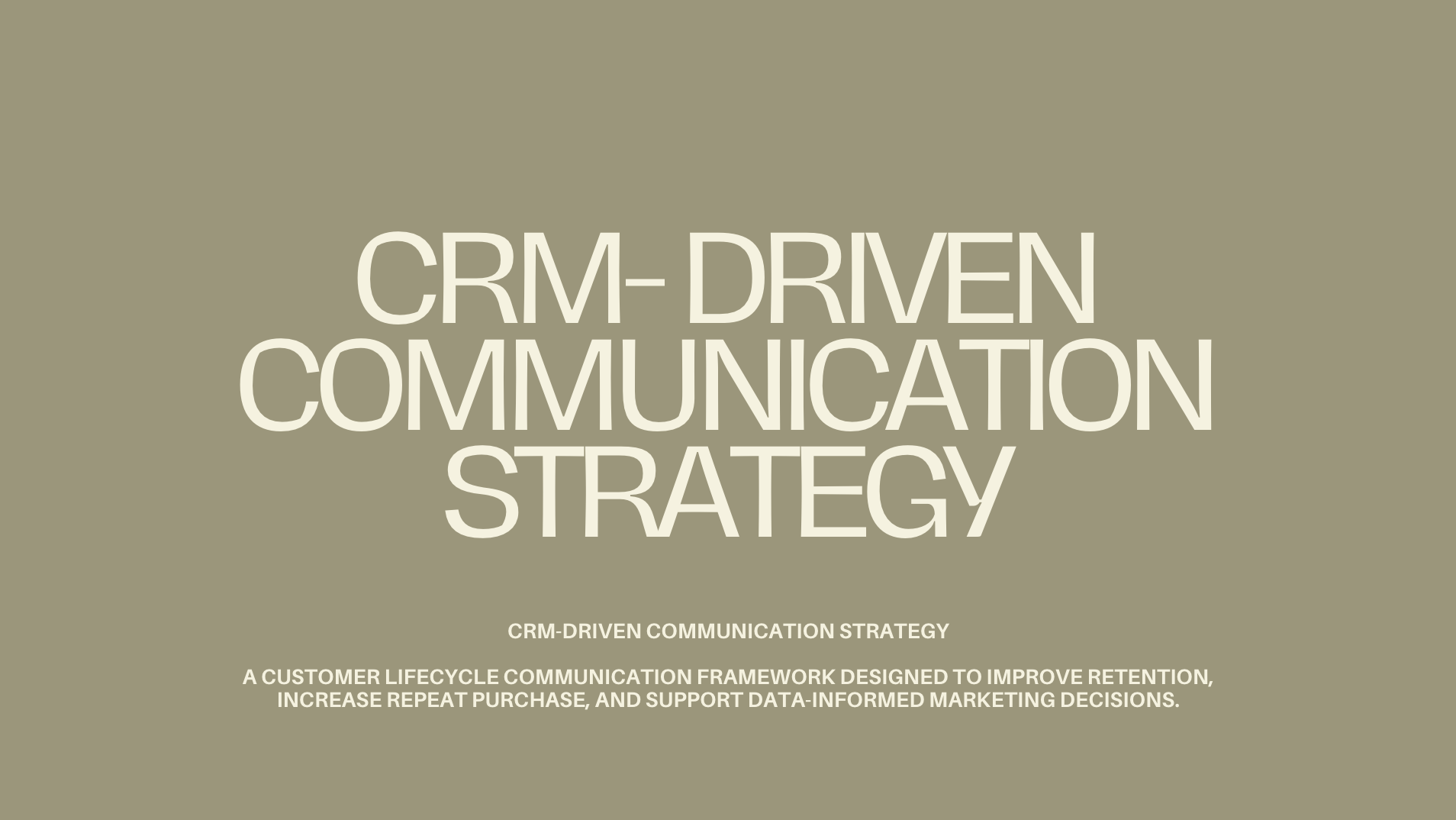
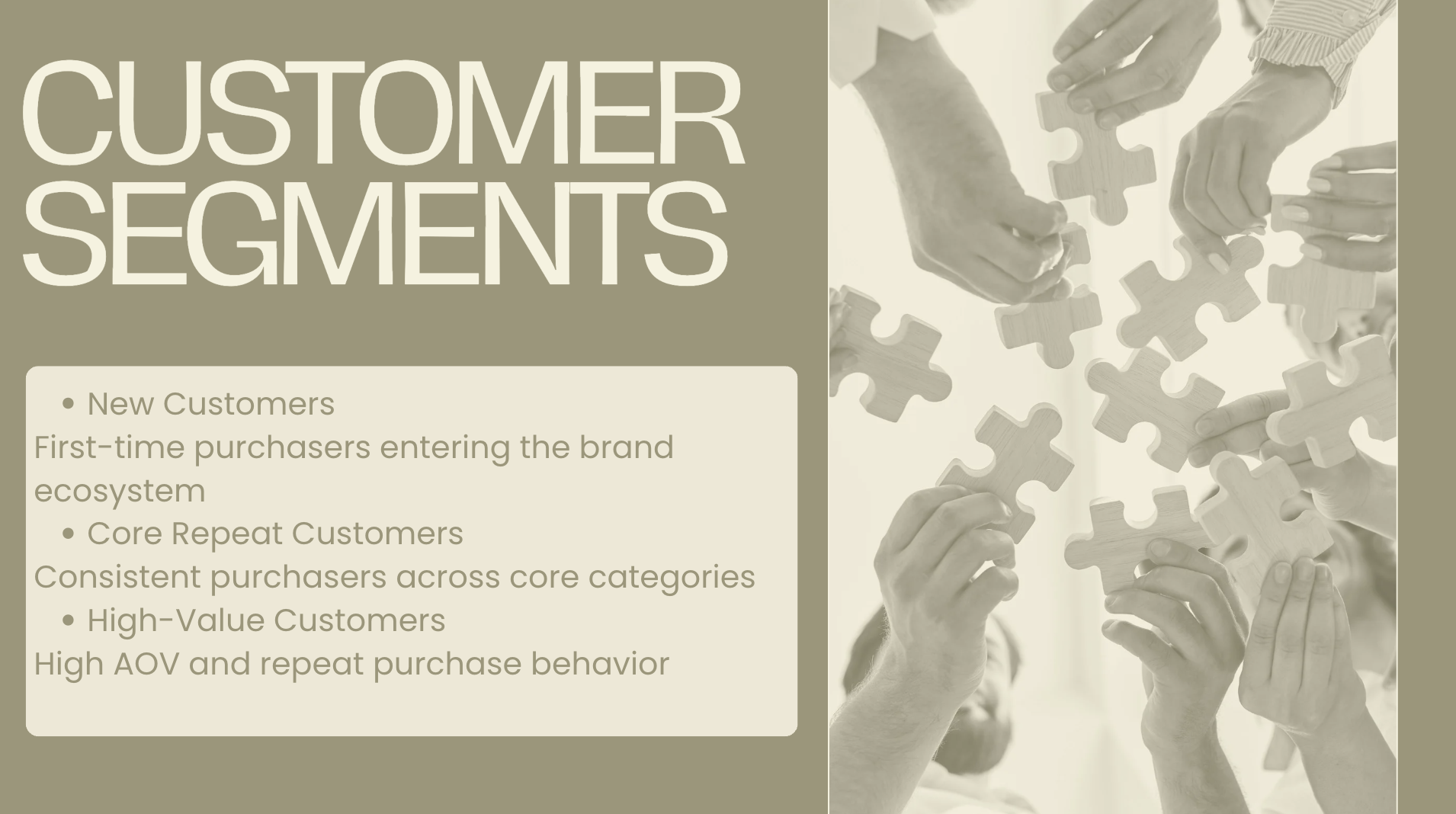
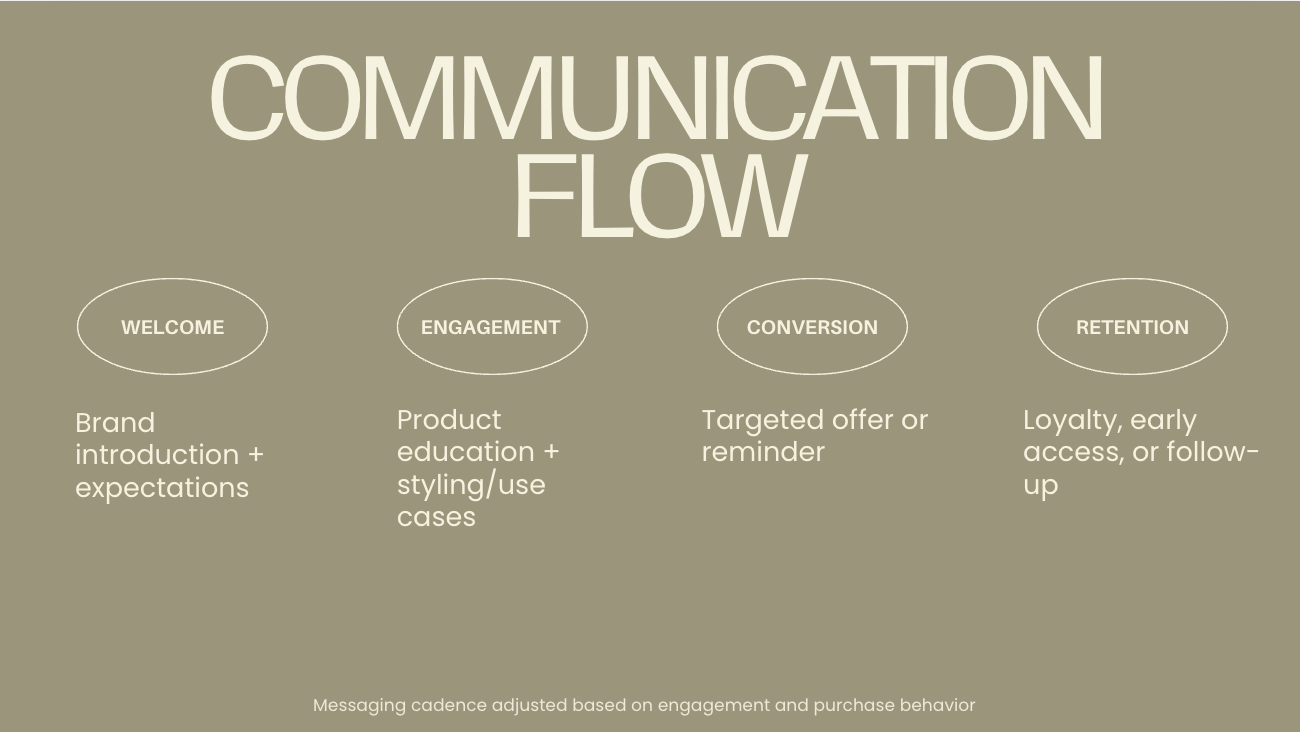
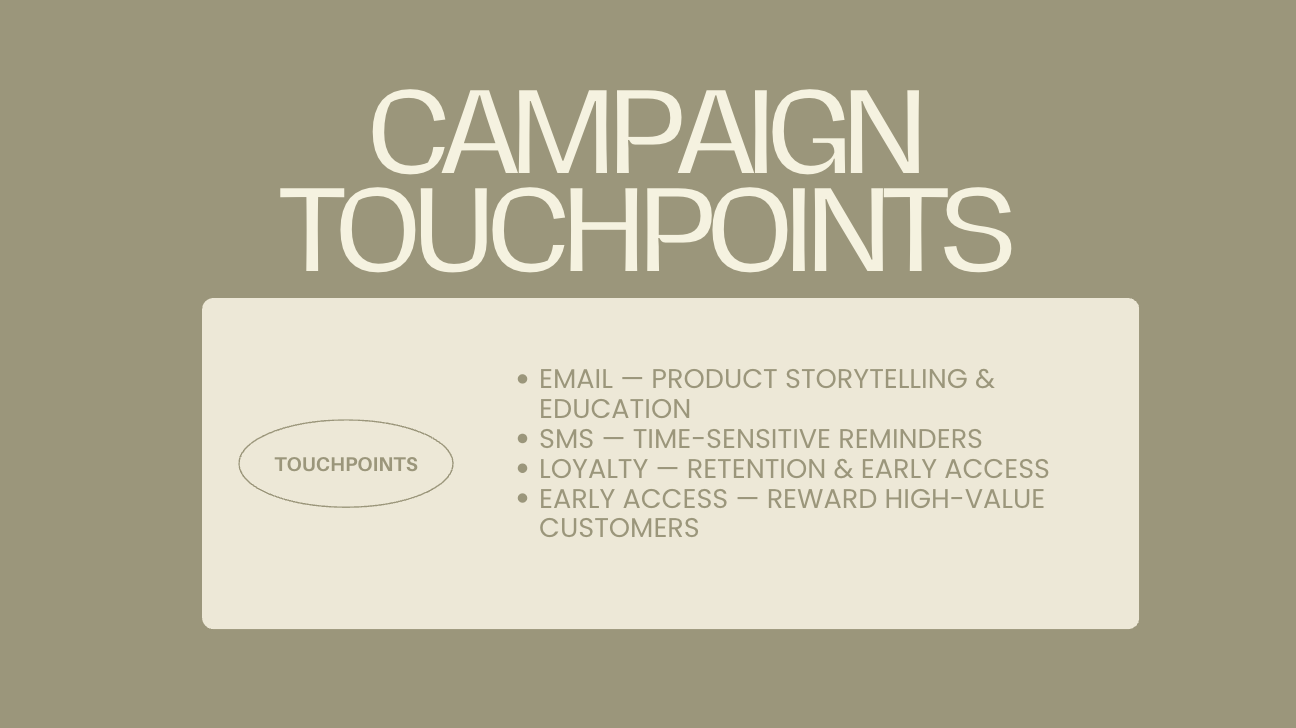
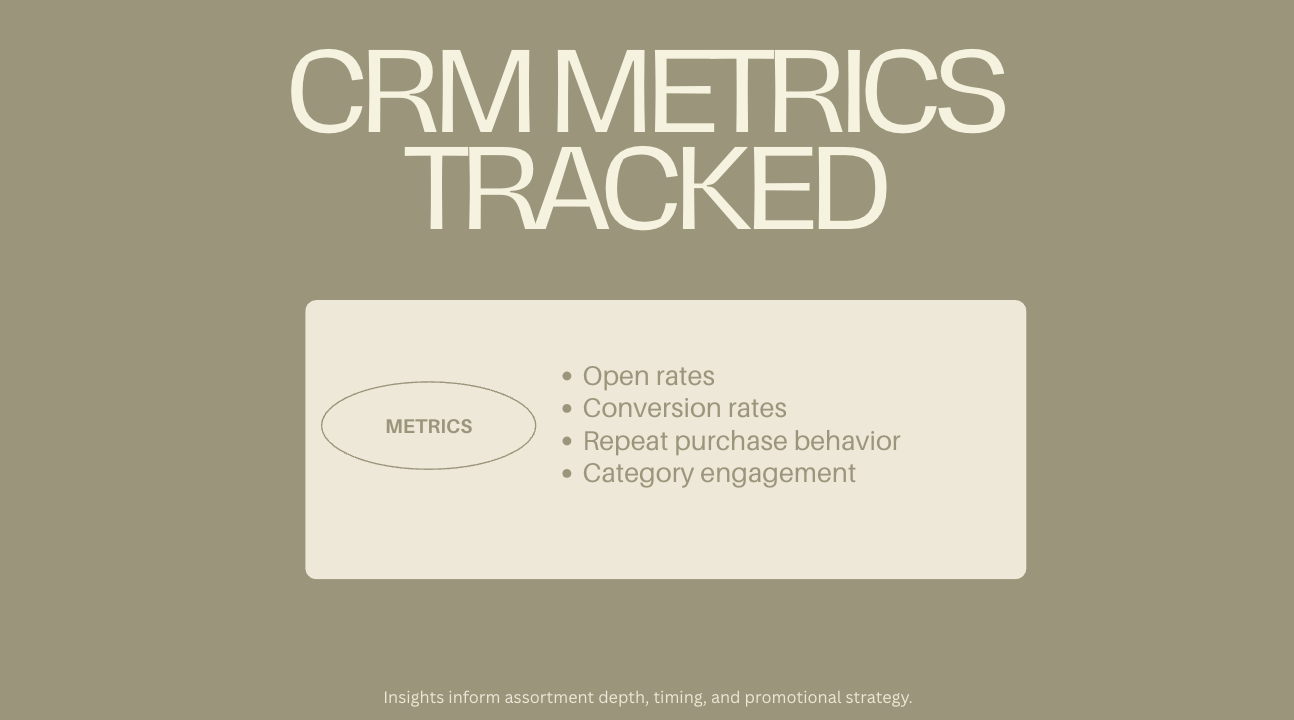
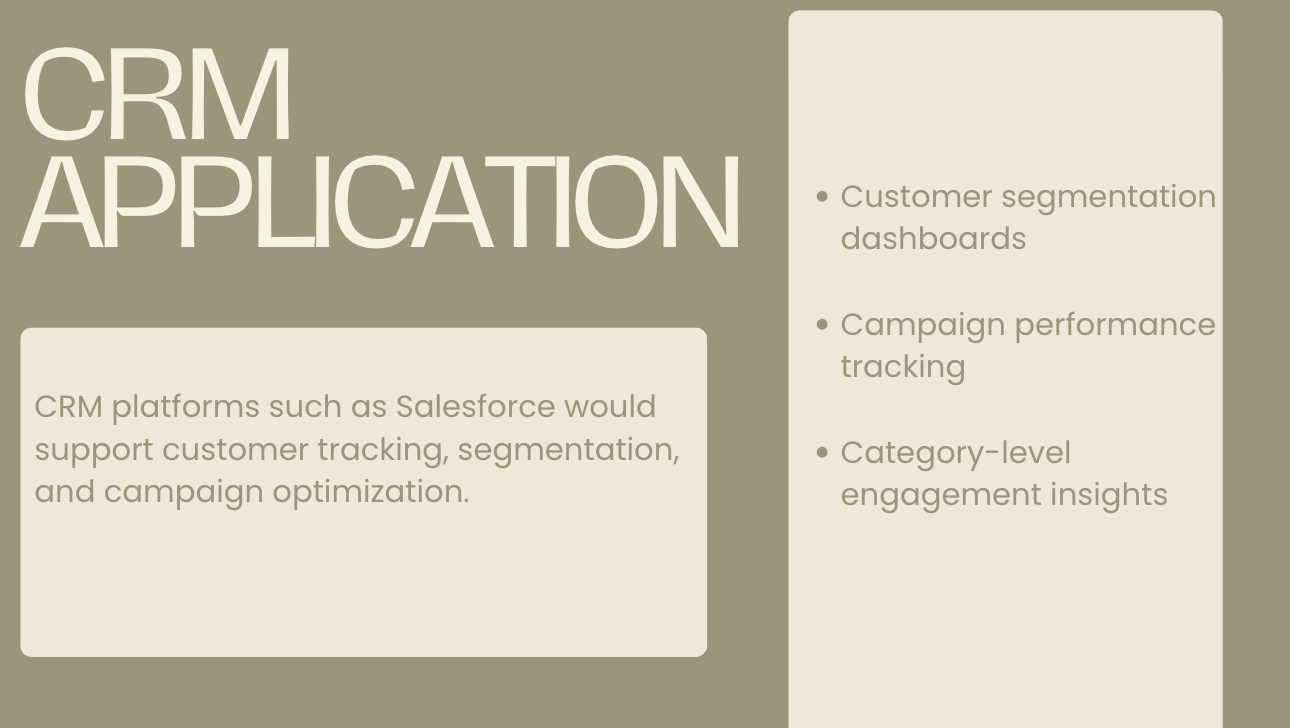
CRM fundamentals • Customer segmentation • Lifecycle marketing • Data-informed decision making • Retention strategy • Sales funnel thinking
Sales & Supply Chain Alignment Strategy
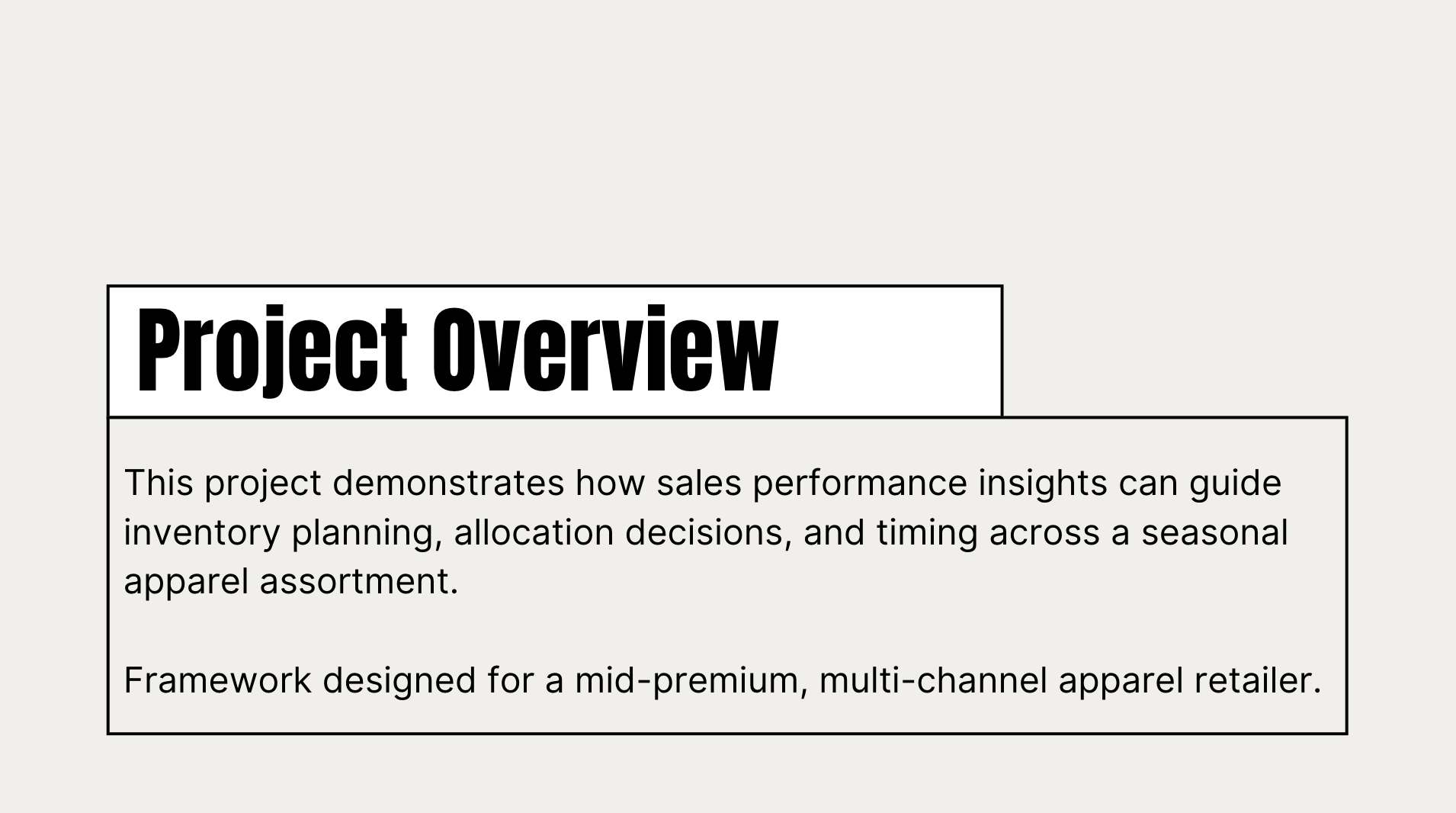
Contemporary Apparel Retailer
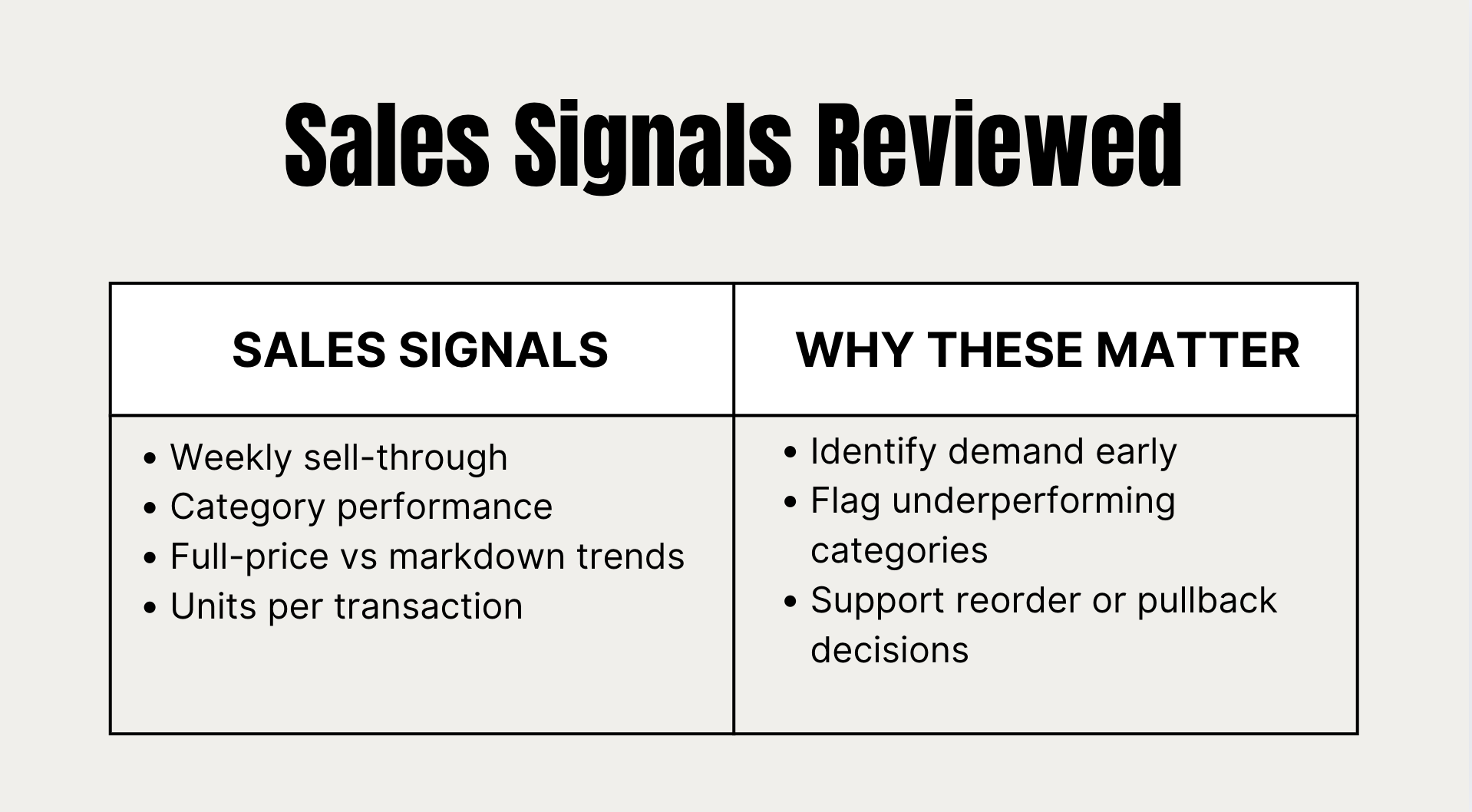
This project examines how sales performance insights inform inventory planning, allocation decisions, and supply chain timing within a seasonal assortment. By analyzing sell-through trends, regional demand variation, and inventory risk, the strategy highlights how cross-functional alignment between sales, merchandising, and operations supports full-price performance and inventory efficiency.
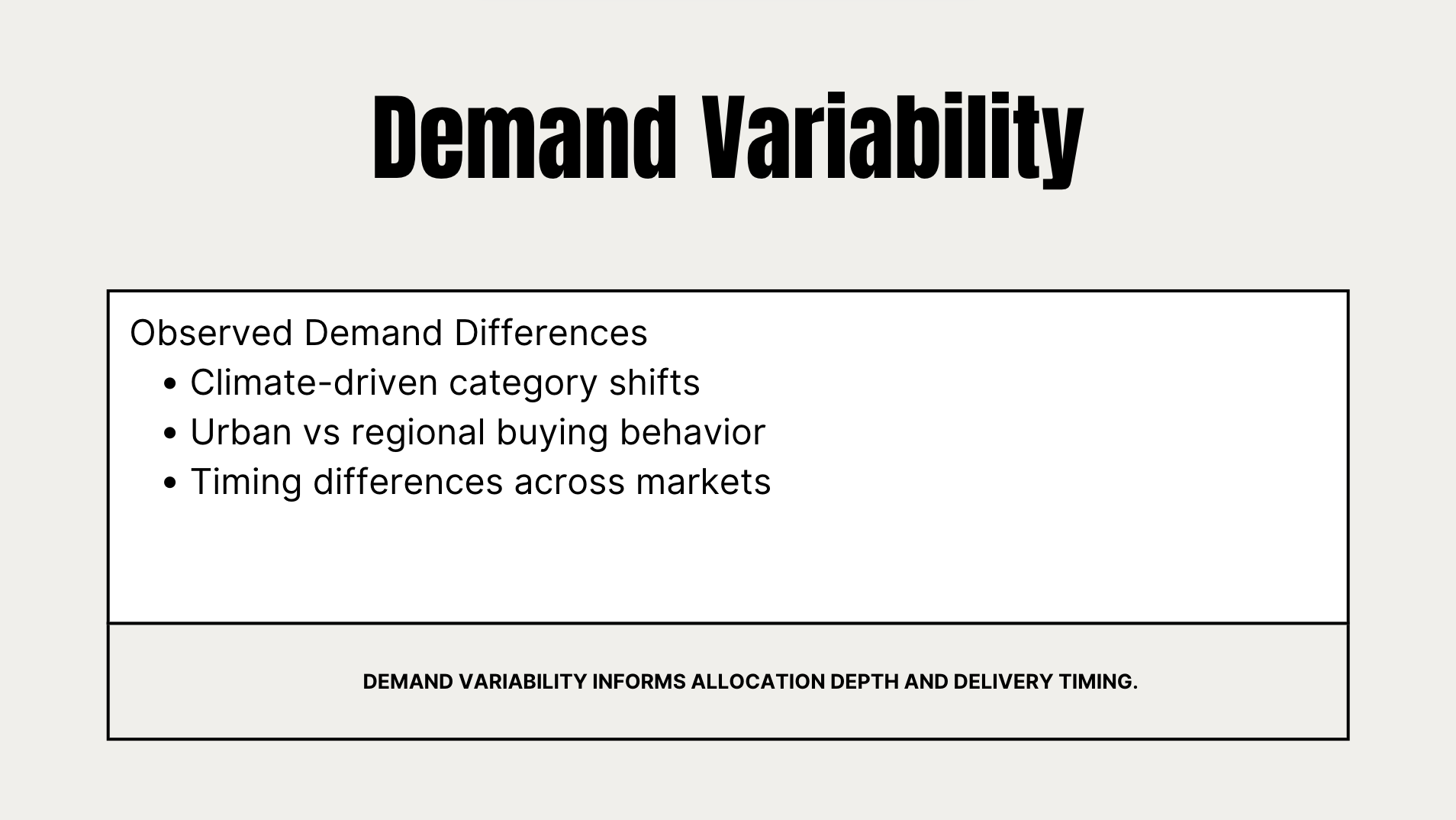
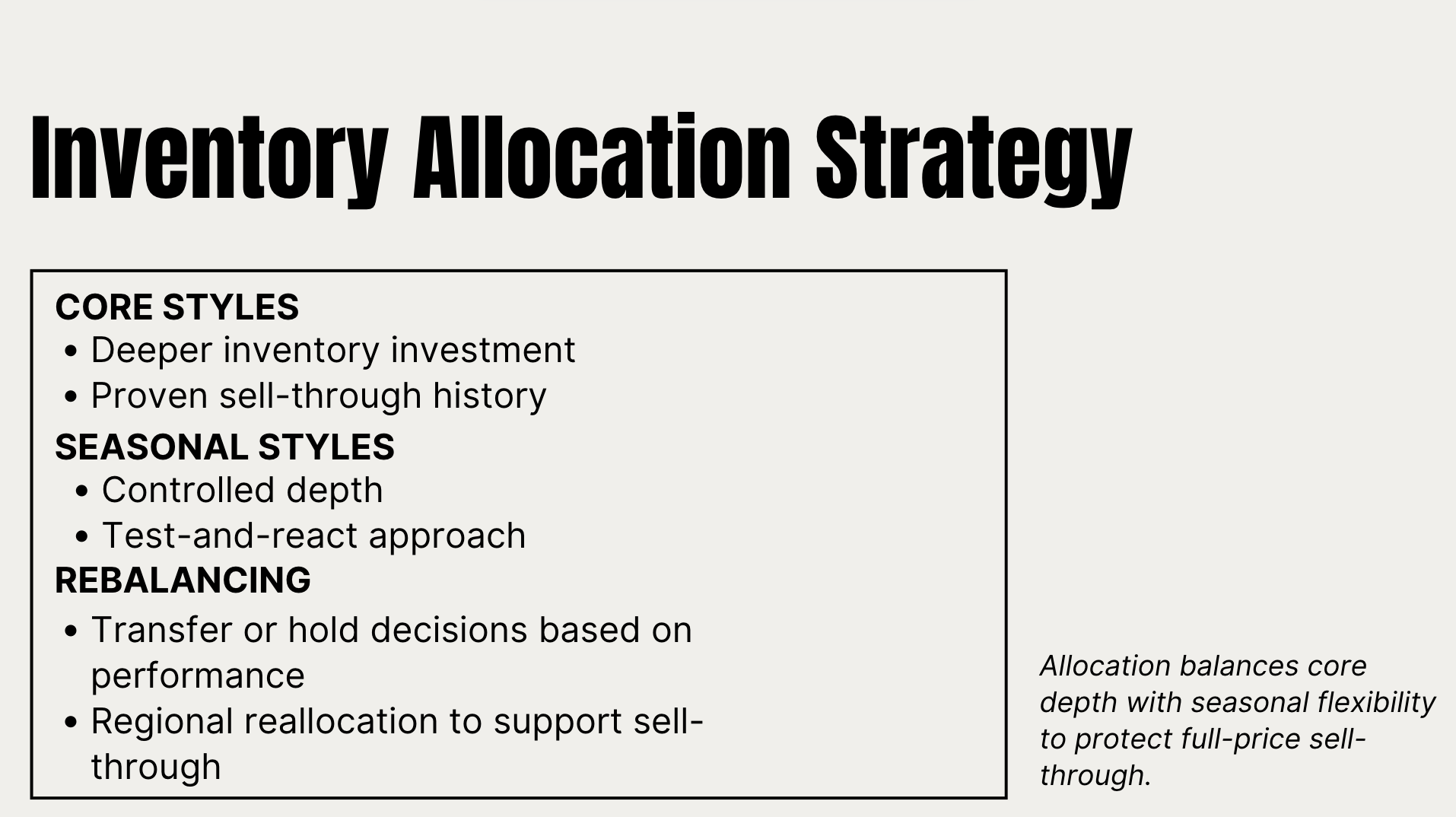
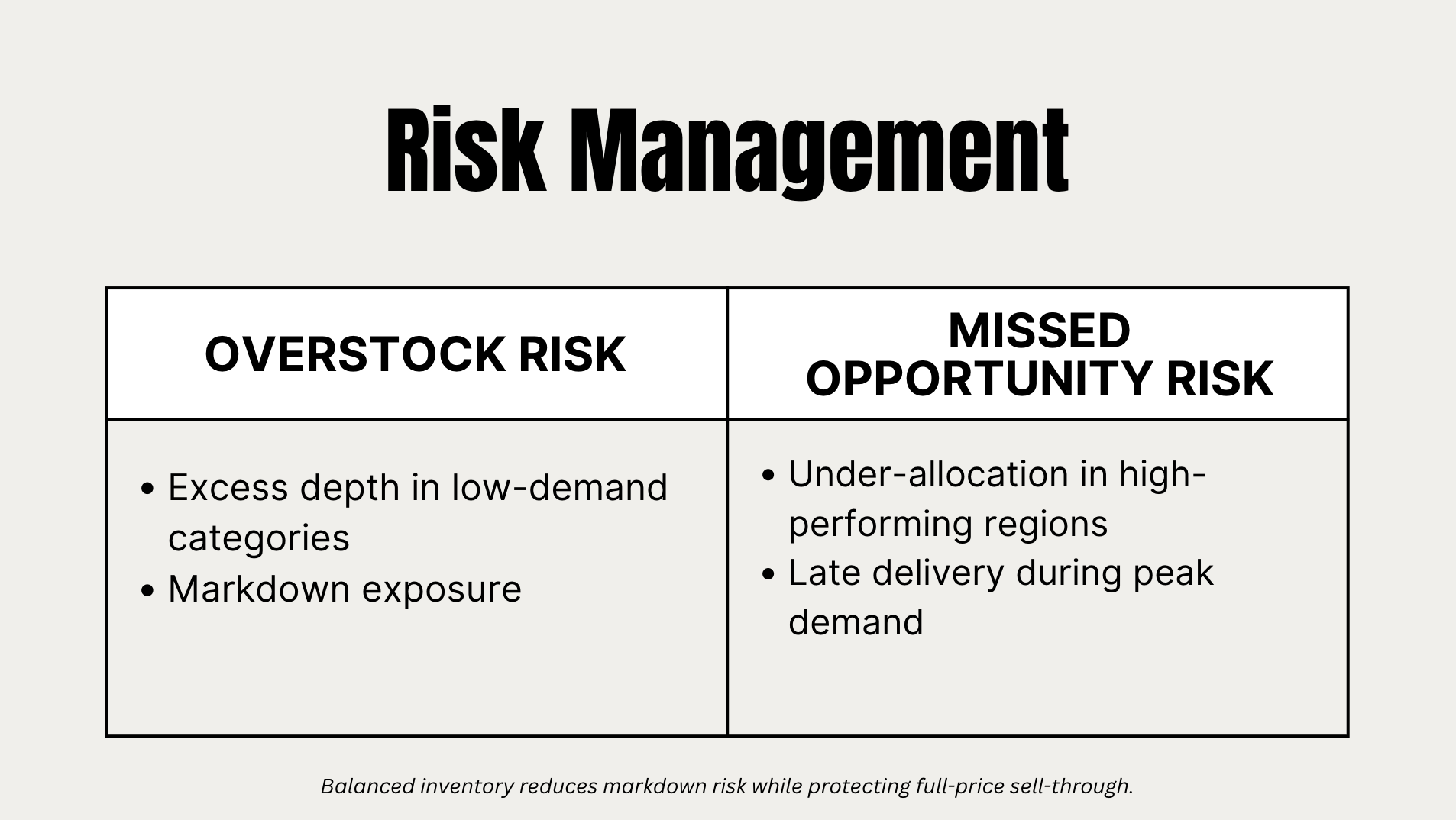
Sales forecasting • Inventory allocation • Supply chain awareness • Sell-through optimization • Risk management • Cross-functional decision making
This project explores a holiday merchandising concept for Ralph Lauren, focused on seasonal storytelling, category emphasis, and elevated in-store presentation. The strategy considers how heritage branding, product assortment, and visual merchandising work together to drive full-price performance during peak holiday selling periods.
Holiday Merchandising Strategy — Ralph Lauren

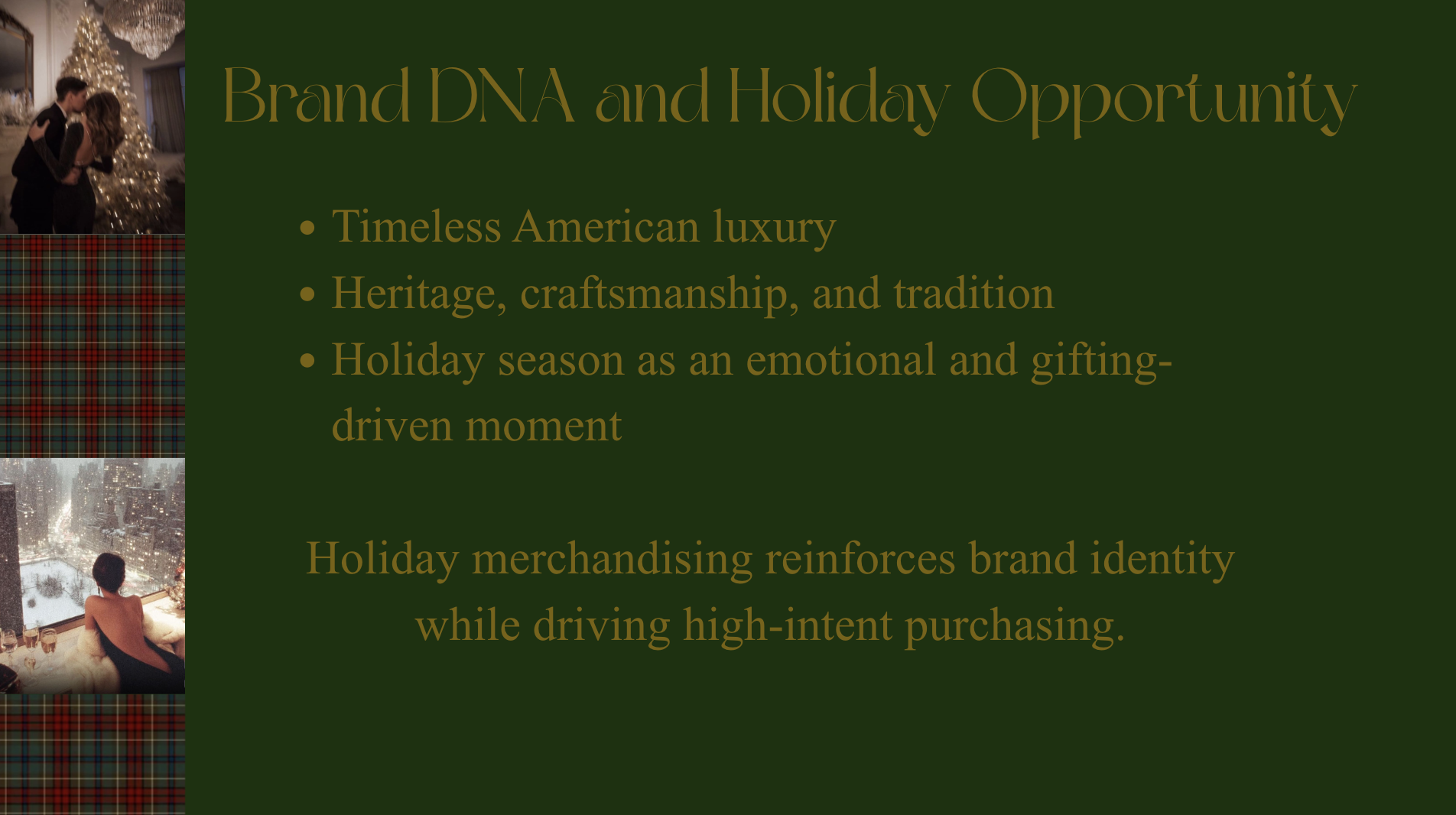
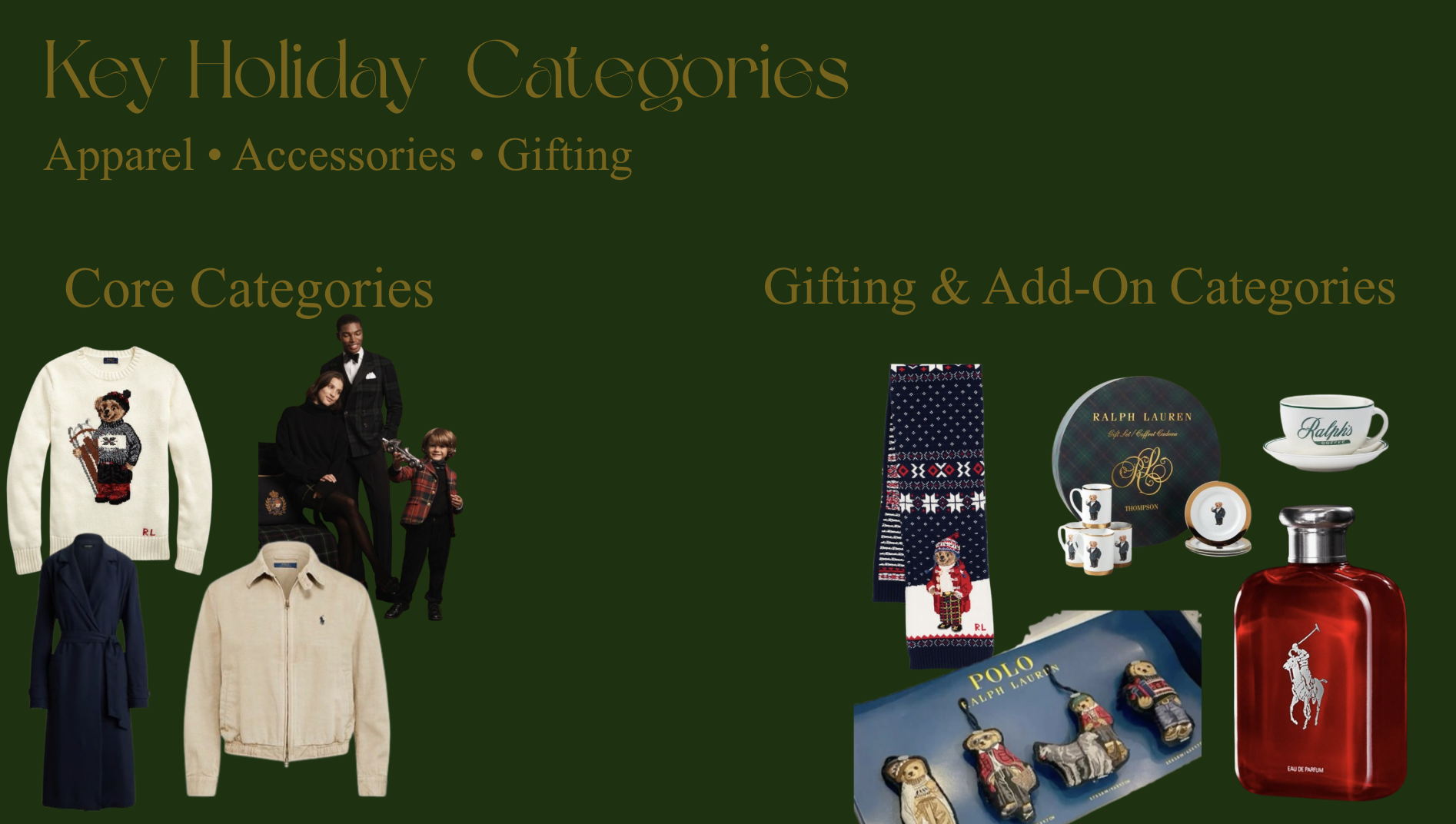

Seasonal merchandising • Category storytelling • Visual strategy • Luxury retail execution • Customer experience
Seasonal Campaign Concept — Aritzia
This project explores a seasonal advertising campaign for Aritzia, translating brand identity into a cohesive visual and messaging strategy across digital, in-store, and social platforms. The campaign emphasizes real-life wearability, elevated basics, and soft structure to drive emotional connection while supporting product sell-through.

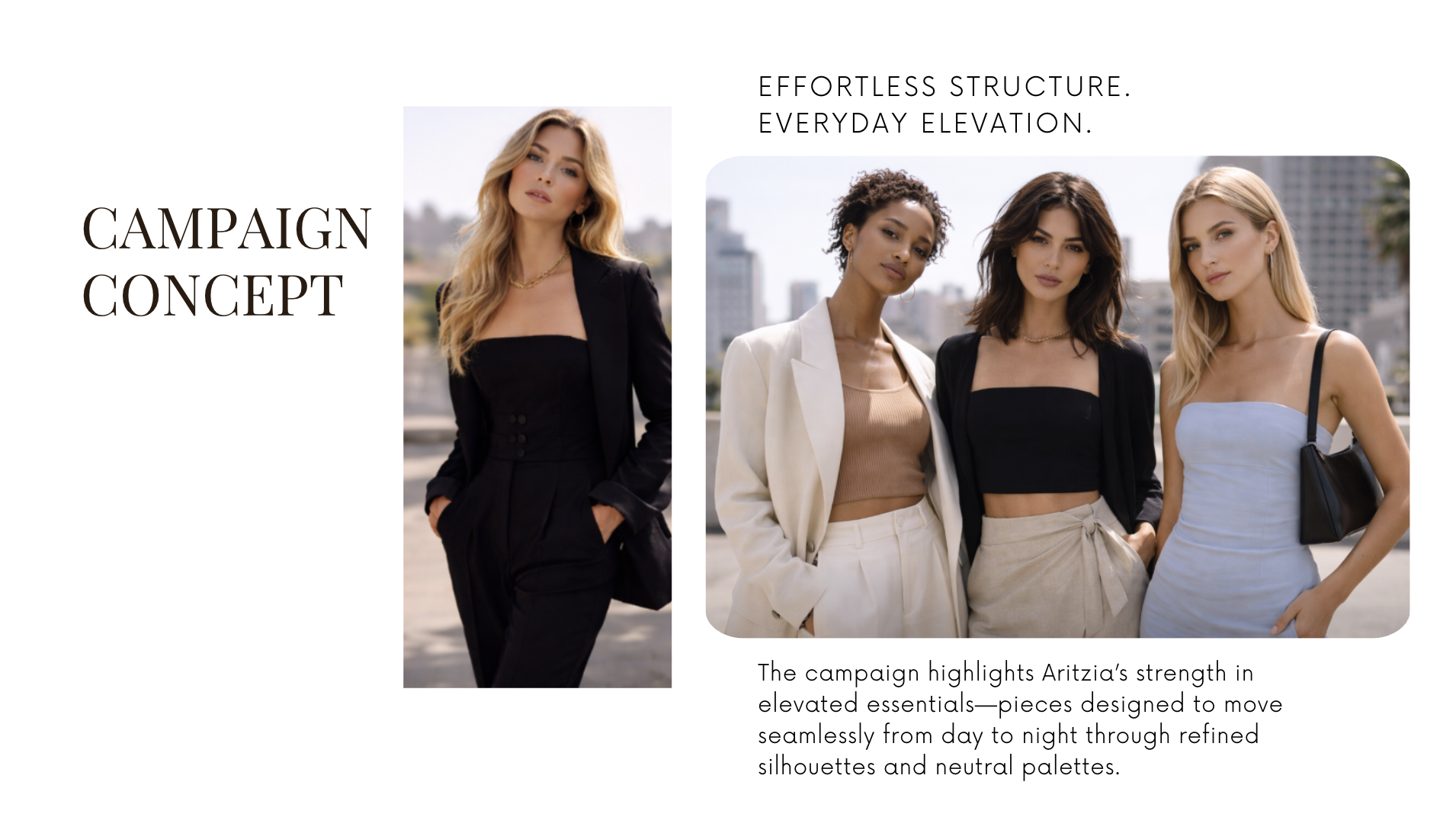
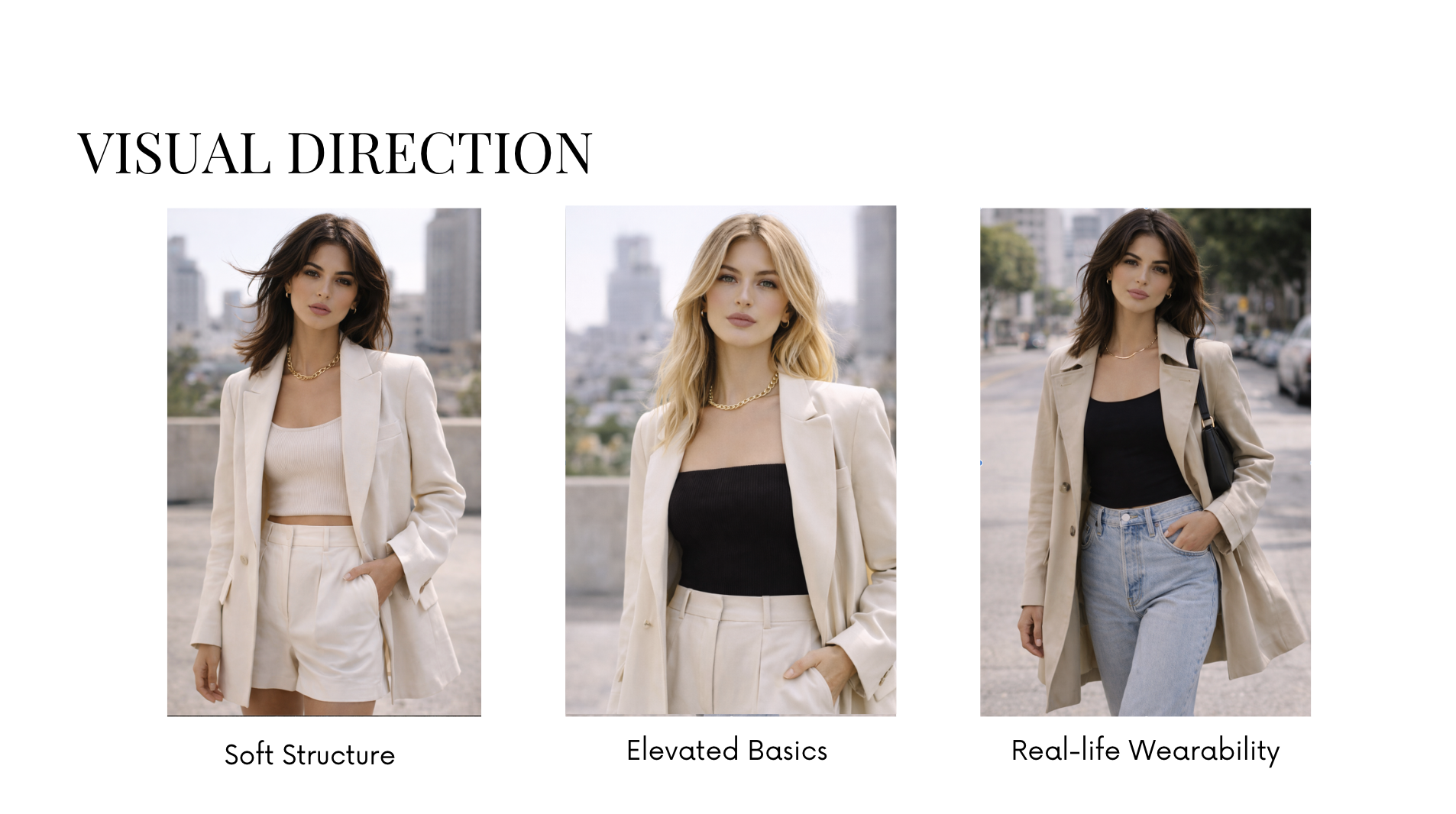
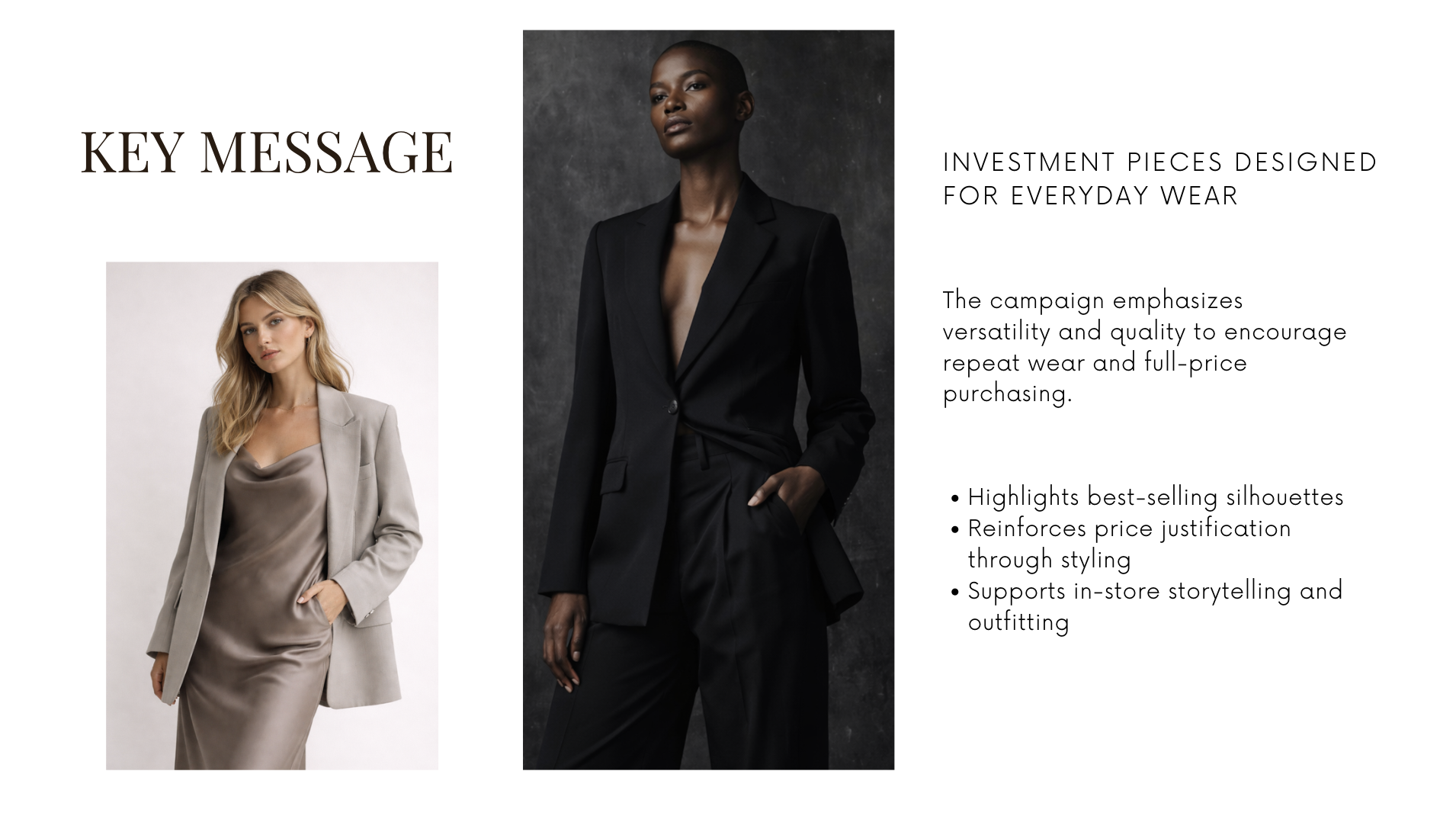
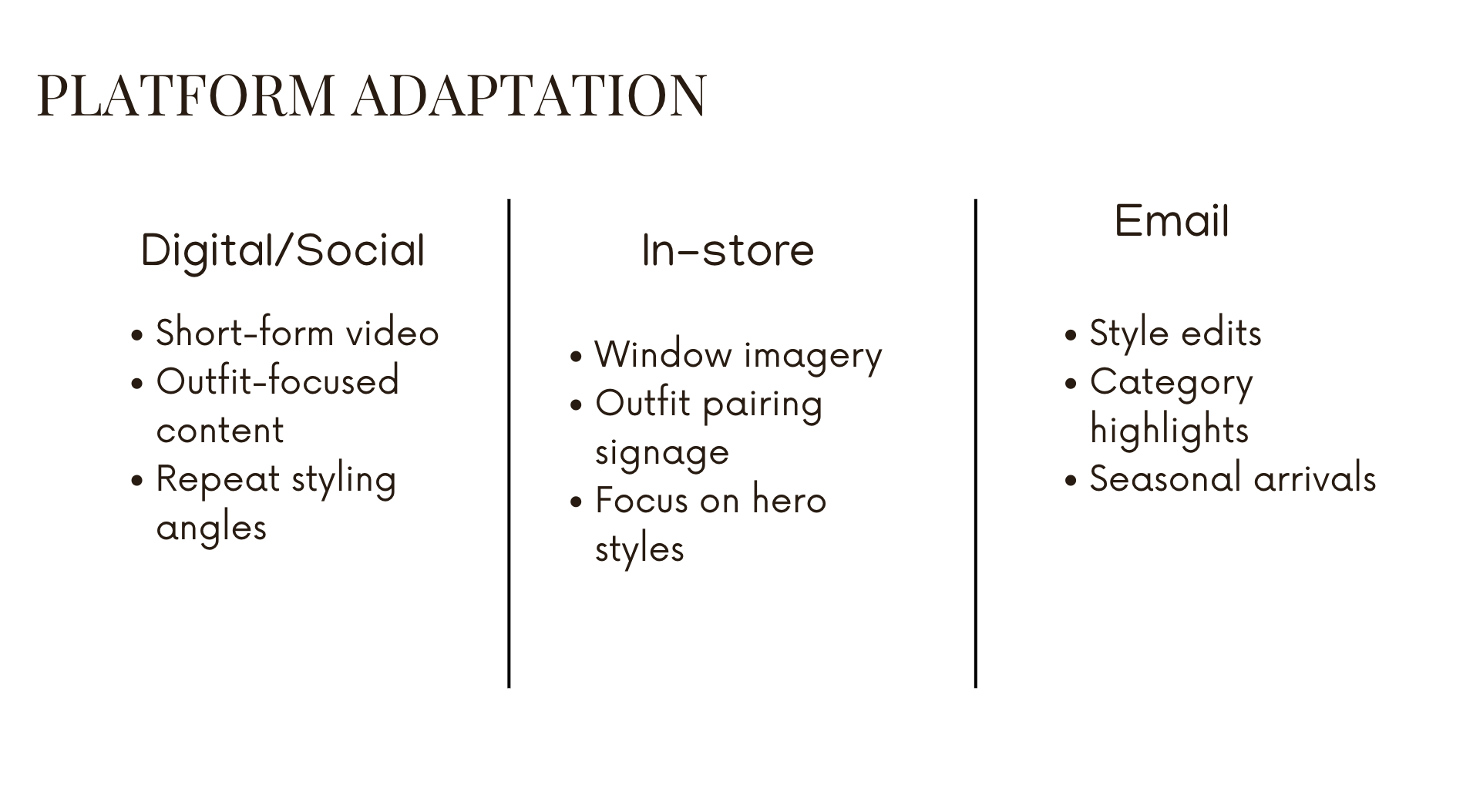
Creative direction • Brand storytelling • Campaign strategy • Visual merchandising awareness • Platform adaptation • Consumer-focused messaging
Excel
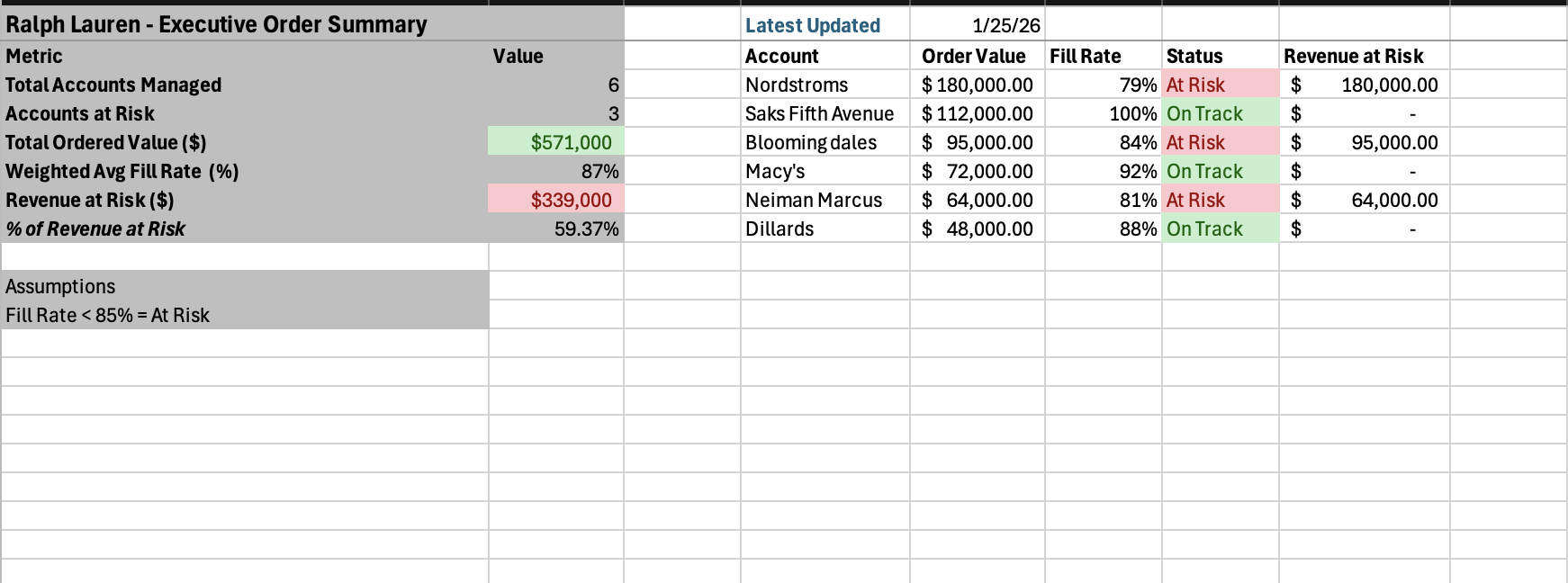
Executive Order Summary
This sheet provides a high-level executive overview of wholesale account performance, using weighted KPIs to assess fill-rate health, identify at-risk accounts, and quantify total revenue exposure. The dashboard aggregates order data to support leadership decision-making and prioritization of service-level risks.
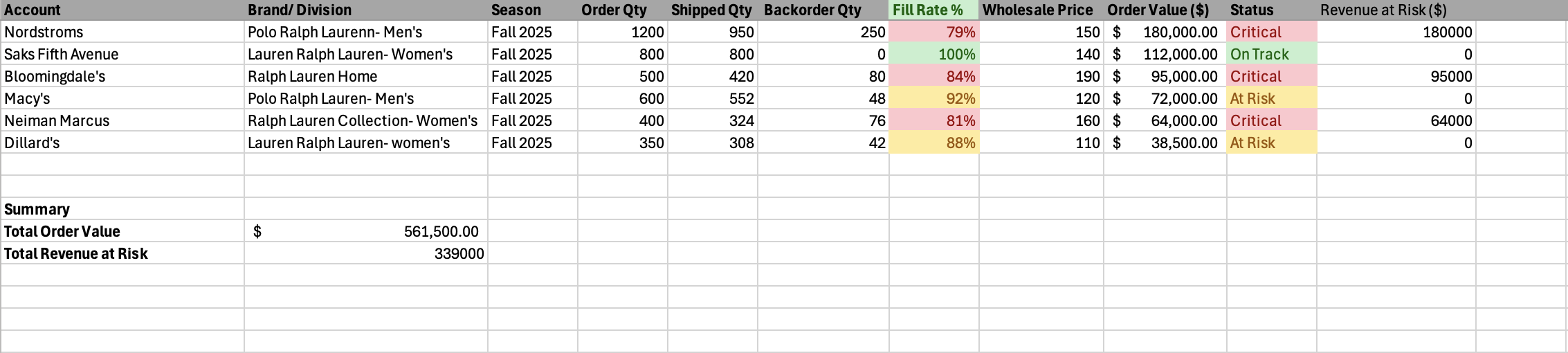
Wholesale Order Fulfillment Tracker
This sheet tracks wholesale order quantities, shipment progress, and fulfillment performance at the account level. Automated calculations for fill rate, backorders, and revenue at risk allow account services teams to quickly identify fulfillment issues and understand their financial impact.
PO-Level Fulfillment & Risk Tracker

This sheet monitors purchase order–level fulfillment from shipment through delivery, automatically flagging delayed orders, risk levels, and required actions. By linking fill rates to escalation logic, the tracker helps prevent delivery failures and reduce downstream financial and operational risk.